
The short answer
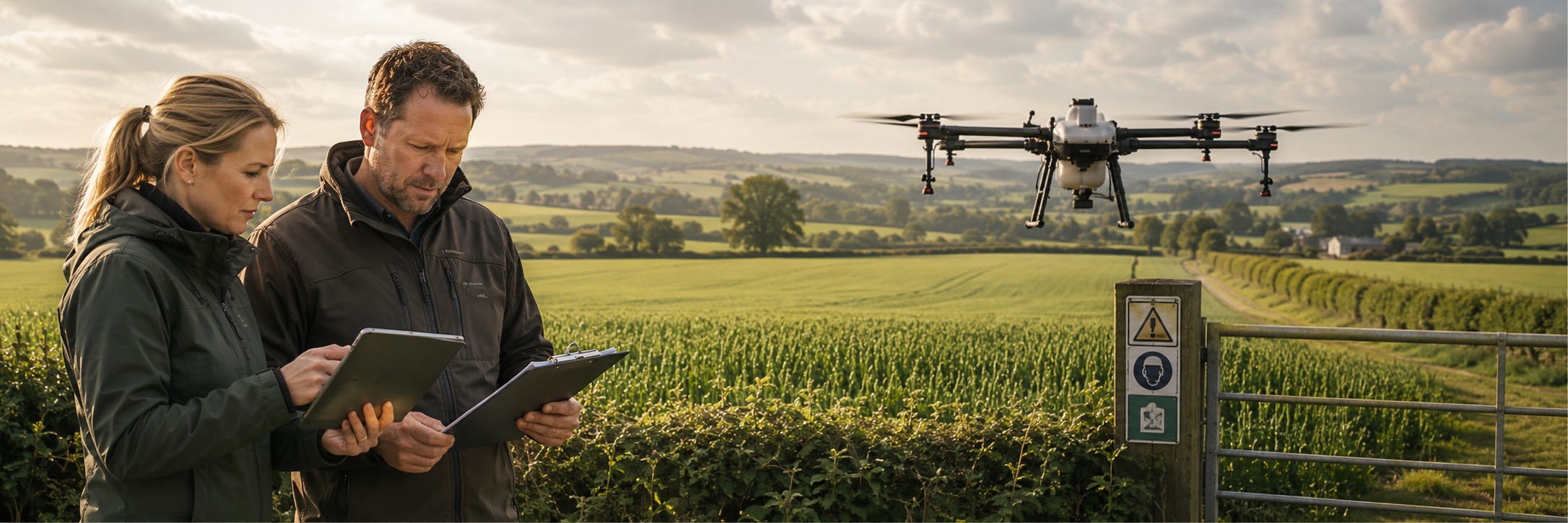
Drone spraying is possible in the UK, but it is far more restricted than the marketing around it suggests. Applying a plant protection product by drone falls within the legal definition of aerial spraying, and under the Plant Protection Products (Sustainable Use) Regulations 2012 aerial spraying is prohibited unless the operator holds a permit issued by the Health and Safety Executive for work carried out to an approved plan.
In practice that means there is no general right for a drone pilot to spray licensed pesticides on a field. Permits have so far been granted for specific cases, including trials and products such as slug pellets, and the HSE is working with industry to widen what is possible. Seed and non-pesticidal fertiliser are outside the pesticide aerial-spraying rules. Pesticidal slug pellets are not. Ask which HSE permit and product authorisation cover the proposed application.
Permissions to check
There are two separate layers. On the aviation side, a commercial operator needs a CAA Operational Authorisation. The everyday PDRA01 permission only covers drones up to 25 kg, and agricultural spray drones are far heavier when loaded, so they require a bespoke authorisation built on a Specific Operations Risk Assessment, with a General VLOS Certificate as the baseline pilot qualification.
On the product side, pesticide application needs the HSE permit described above, plus the correct product approval for the crop and situation. Ask the operator to explain both layers for your specific job. If they cannot, that tells you something useful.
Questions before work starts
Good questions include: what product is being applied and at what rate, under what authorisation, by whom, with what records, and what happens if the weather or site conditions change on the day. For pesticide work, ask about the permit position rather than accepting a general assurance.
If the work is delivered through a network, confirm who the UAS operator is, what permission is being relied on, and who carries the legal responsibility if something goes wrong.
Where to go next
Use the drone spraying service page to build a shortlist, then read the hiring checklist before you commit. This page is general information rather than legal advice, so always confirm the current position with the operator and the relevant authorities.
Related guides
- Agricultural drone law in the UK: what you can and can't do
- How much does drone spraying cost?
- What to ask before hiring a drone operator
Useful links
Start with the operator directory, training providers, equipment page and quote request form.
FAQs
Can every drone operator spray crops?
No. Spraying a pesticide by drone is aerial spraying under UK law and needs a Health and Safety Executive permit for an approved plan, plus the right aviation authorisation.
Is drone spraying banned in the UK?
Not banned outright, but restricted. Aerial spraying of pesticides is prohibited without an HSE permit. Permits have been granted for specific cases such as trials and slug pellets.
Do I need a CAA authorisation as well?
Yes. Commercial application drones weigh over 25 kg when loaded, so they need a bespoke CAA Operational Authorisation, not the standard PDRA01 permission.
Does this site provide legal advice?
No. UK Agricultural Drones is a directory and general information resource. Confirm the current position with the operator and the relevant authorities.