
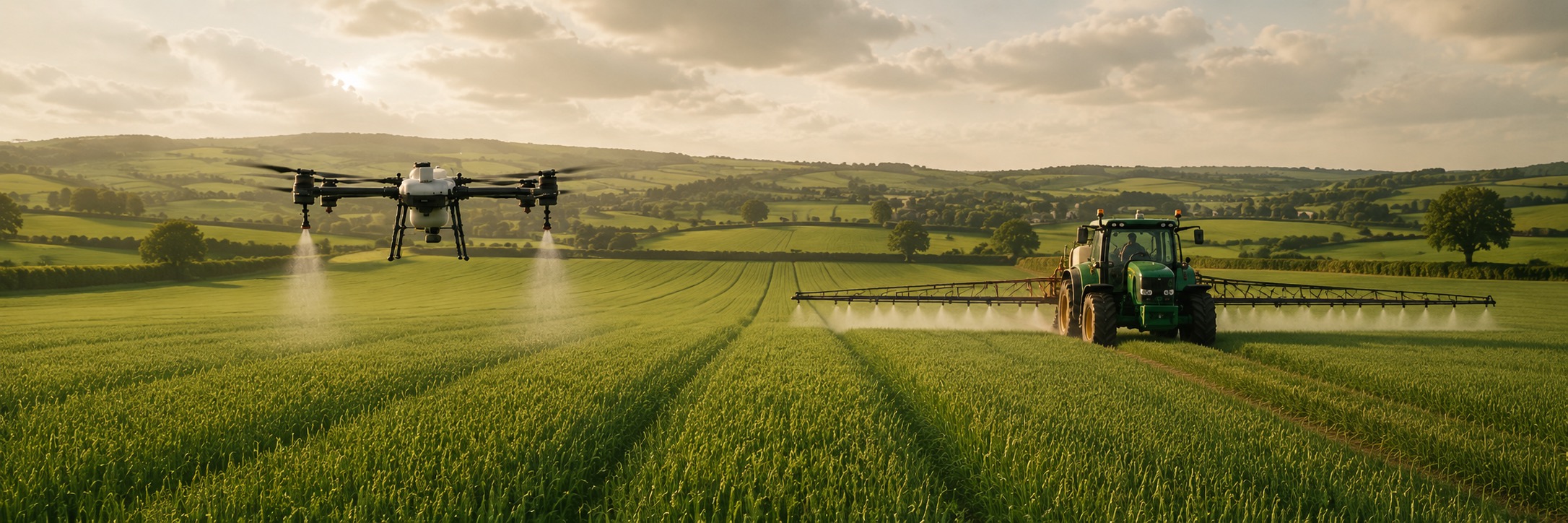
Where drones may help
Drones can earn their place where ground machinery struggles: difficult access, small or awkward parcels, wet or steep ground, protected cropping, field trials, and situations where wheelings would damage the crop. They can also help when timing is tight and the window for a tractor pass is closing.
Their strength is precision on tricky sites, not raw output. For large, open, accessible fields a conventional sprayer still moves far more volume per hour.
Where traditional spraying still fits
Boom sprayers remain the better tool for most broadacre work, high water volumes, established programmes and any situation where the product label or site does not suit aerial application. A self-propelled sprayer covers ground a drone cannot match, and the cost per hectare on open land usually reflects that.
There is also the regulatory reality. Spraying licensed pesticides by drone is treated as aerial spraying and is permit-limited, while a ground sprayer operating to label is routine. For many pesticide jobs today, traditional application is simply the lawful and practical option.
Compliance checks
Whichever method you use, the same questions apply: is the product suitable, at the right rate, with drift controlled, applied by a competent operator with the right insurance and records. Drones do not remove any of these responsibilities, and for pesticides they add the aerial spraying permit question on top.
Hiring questions
Ask an operator why a drone is the right tool for your specific job, and what they would recommend if it is not. A trustworthy operator will sometimes tell you that a sprayer or a specialist contractor is the better answer.
Related guides
Useful links
Start with the operator directory, training providers, equipment page and quote request form.
FAQs
Are drones a replacement for sprayers?
Not usually. They suit difficult access, small or awkward areas and protected cropping. Boom sprayers still cover open ground far faster.
Is drone pesticide spraying allowed?
It is restricted. Spraying licensed pesticides by drone is aerial spraying and is permit-limited, while a ground sprayer working to label is routine.
Who decides which method suits a job?
The farmer, agronomist and operator together, based on the crop, product, site and the rules that apply.